COMMUTE · VALUE · INSIDE ROUTE 128
LIVING IN DEDHAM
Dedham gets picked for a specific reason: it sits right where Route 128 meets the city. You can be on a train to downtown in under half an hour and still come home to a town with its own square, its own history, and more space than the same money buys inside the city. That tradeoff is the whole story.
DEDHAM AT A GLANCE
COUNTY
Norfolk (Dedham is the county seat)
RAIL TO SOUTH STATION
~28 min (Franklin/Foxboro, Dedham Corporate Center)
DAYS ON MARKET
~3 weeks
SPRING 2026
DISTANCE
~10 miles southwest of Boston
MEDIAN HOME
~$690,000 (spring 2026)
PROPERTY TAX
~$13.35/$1,000 (FY2026)
About these figures: Market data are estimates compiled from third-party sources (such as MLS and Redfin) for general information only — not an appraisal, an offer, or a guarantee of value, and individual properties vary. Property tax rates are set by each municipality and change; confirm the current rate and any exemptions with the town or city assessor. Information deemed reliable but not guaranteed.
DEDHAM'S STRONGEST CARD
~28 minutes to South Station
-
If you work in or near downtown, this is usually the deciding factor. Dedham sits at the junction of Route 128 / I-95 with I-93 close by — few towns this close make getting around this simple.
-
By train: Franklin/Foxboro rail from Dedham Corporate Center to South Station in ~28 min — often calmer than driving in from closer-in neighborhoods.
-
By car: straightforward access to downtown, the South Shore, the airport, and points west and north.
-
Amtrak option: the Route 128 station sits right at Dedham's edge for longer regional trips.

WHAT IT ACTUALLY COSTS
MEDIAN HOME PRICE · SPRING 2026
~$690,000
Prices vary a lot by pocket — some areas well below, some comfortably above $1M. Homes average roughly three weeks on market, often with multiple offers. Residential rate about $13.35 per $1,000(FY2026) — roughly $9,200/yr on a $690K home.

NEIGHBORHOODS & HOUSING STOCK
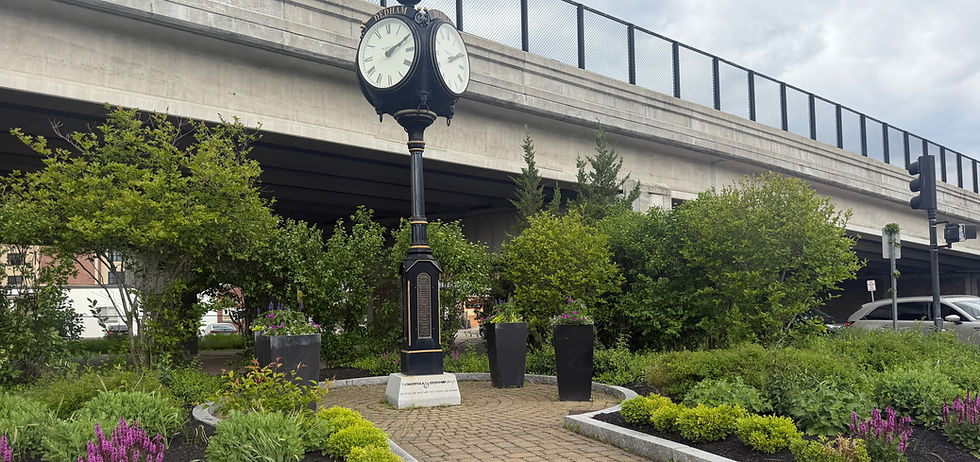
Dedham Square. The historic, compact center — dining, local shops, easy character.
Riverdale & Oakdale. Established residential areas with a mix of styles and sizes.
East Dedham & Greenlodge. Pockets that tend to offer more accessible price points.
Dedham Village area. Home to some of the town's larger and higher-end properties.
Tell me your priorities and I'll point you to the right pockets.
SCHOOLS
Dedham is served by Dedham Public Schools across all levels, plus a notable concentration of independent schools (Noble and Greenough, Dedham Country Day, Ursuline Academy). If specific schools matter, tell me which — I'll factor placement and timing and point you to primary data.
LIFESTYLE & AMENITIES
-
Legacy Place: an open-air center with retail, dining, a movie theater, and grocery off Route 128.
-
Dedham Square: the historic downtown — independent restaurants, coffee, local businesses.
-
Charles River & Wilson Mountain Reservation: trails, river access, and green space in town.
-
Convenience: errands, the airport, and weekend trips in any direction are genuinely easy.
Dedham is the middle path — real proximity to the city without city pricing, and a town center with actual character.
THE HONEST VERDICT
Is Dedham a good place to buy in 2026?
If your priorities are commute, value relative to the city, and a town with its own identity, it's one of the stronger options inside Route 128. The flip side is the same thing that makes it desirable: inventory is tight and good homes move fast, so being ready, pre-approved, and clear on criteria matters more here. The goal is that when the right home comes up, you're positioned to act.
Frequently Asked Questions
